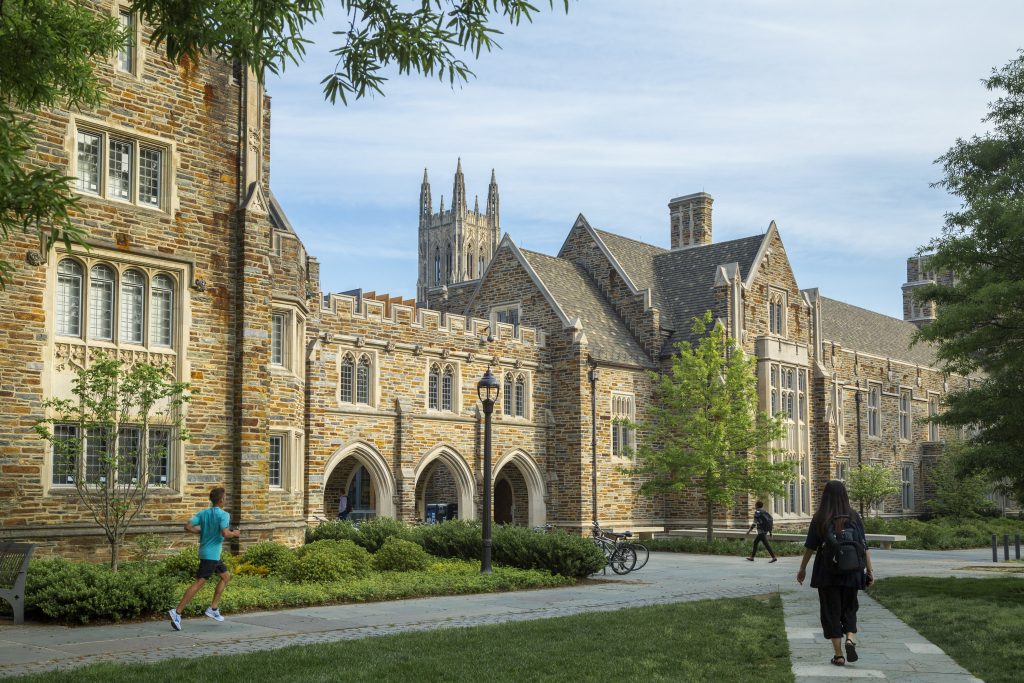
Duke Chapel standing over campus building

Category: Getting Started

Media Training

Duke encourages its faculty members and others to share their expertise with a wide range of audiences. One way to do this is by engaging with news media.

Duke Communications, Marketing, and Public Affairs is available to help faculty and others prepare for media interviews, develop relationships with reporters, write opinion pieces and disseminate research and expertise using news releases and other methods. Contact dukenews@duke.edu for assistance.

If a Reporter Calls

The Duke Duke Communications, Marketing, and Public Affairs team offers the following tips for media interviews:

  • If you need help – ask. If you’ve received a call from a reporter and have any questions or concerns about how to respond, contact Duke Communications, Marketing, and Public Affairs: dukenews@duke.edu.
  • Respond as soon as possible, but don’t feel rushed to talk. Remember that reporters’ deadlines are often measured in minutes; if you agree to be interviewed, you must respond quickly. If a reporter calls and you are caught off-guard or are preoccupied with another task, ask to call back so you can gather your thoughts.
  • Identify the reporter. If you agree to an interview, write down the reporter’s name, media outlet and contact information. If you have any doubts about the reporter’s identity or the outlet’s legitimacy, contact: dukenews@duke.edu.
  • Decide what you want to say. Many academics view their objective in an interview as avoiding saying anything foolish. That’s important, certainly, but you may not accomplish much with such a defensive approach. You should also view the interview as an opportunity to communicate what you want to say.

    Before you begin, decide what two or three key points you want to get across, and have both data and human examples ready to highlight each one. Find a way to make these points during the interview, even if the reporter doesn’t ask about them.
  • Provide background information. You can help the reporter – and minimize errors – by offering to provide background information on complex topics. This can include material from other sources.
  • Prepare for difficult questions. Anticipate difficult questions and prepare responses to them. Never say, “No comment.” Instead, explain why you can’t or won’t answer the question.
  • Give simple, direct answers. Be brief. Reporters likely will use short quotes, clips or sound bites. Avoid jargon and explain the topic as simply as possible. It’s best to avoid flippant or joking comments that sound acceptable in conversation but might be taken out of context.
  • Nothing is “off the record.” Don’t say anything you don’t want to read in the newspaper or see on the evening news, even when the formal interview seems to have ended and you are just chatting with the reporter.
  • Ask questions. Although reporters are unlikely to let you review a story before it’s published or aired, they may let you verify specific information or quotes. It doesn’t hurt to ask.
  • Give feedback. If a reporter makes a major mistake, call the publication and ask for a correction. If the mistake is minor, it may be better to let it go. If you have any questions about whether the issue should be pursued, contact Duke Communications, Marketing, and Public Affairs.

    If you feel the story is well done, let the reporter know that, too.

Duke Language Usage Guide

Introduction

In general, Duke University follows The Associated Press Stylebook for stylistic issues pertaining to news releases and other information generated for news media and for news material distributed on the Web. When an issue is not covered in the stylebook, we rely on Webster’s New World Dictionary.

The discussion of grammar and usage is far from comprehensive, but some common errors have been highlighted. When in doubt, or when the example you’re seeking isn’t covered, we strongly recommend that you consult the guides mentioned above, as well as others, such as Strunk & White’s “The Elements of Style.”

For general grammar and usage questions, there are also a number of helpful online dictionaries and usage guides, among them:

Questions? Contact us. (DukeNews@duke.edu)

Please note: Through the following examples, italics are used to highlight the word or phrase in question, and not to indicate that the word or phrase should be italicized.

abbreviations

Dr., M.D., other titles
These titles are capitalized and abbreviated before a name. Note: For stories not meant for media or Duke MarComms websites, Duke can deviate  from AP style for titles referring to medical doctors and those who hold doctor of philosophy (Ph.D.) degrees.
On first mention you can use M.D. or Ph.D. (use last name only on subsequent references to the person):

Anthony Fauci, M.D.,  told Congress …

Fauci later clarified his comments ….

Angela King, M.D., and Natalie Lopez. M.D., attended …

Josh Jenkins, Ph.D., published his first book …

Jenkins graduated from Duke in 1993.

For media and MarComms:
Surgeon General Dr. Vivek Murthy told Congress …

Josh Jenkins published his first book in 2007. He holds a doctorate in anthropology from Duke University.

Abbreviate the following (whether for MarComms/media or a Duke article) only before a full name:

Gov. Roy Cooper
Lt. Gov. Bruce Lee
Rep. David Price (D-NC)
Sen. Tom Tillis (R-NC)
Sens. Mitt Romney and Charles Schumer …
and all military titles (Gen., Adm., Col., Maj., Capt., Pvt., Pfc., etc.)
Gen. George Patton said …
Patton served from …

Professor is never abbreviated and only capitalized if part of a title:
Joe Smith, the Eugene Jones Professor of Chemistry …

Speaking to students, chemistry professor Jane Doe …

United States and United Nations:

Spell out on first reference, then abbreviate U.S. and U.N. as nouns on second and subsequent references. Abbreviate always when used as adjectives.

The United States contribution to the U.N Climate Fund is larger than that of any other nation.

The U.S. ambassador said she will not protest the meeting at the United Nations. But a U.N. spokeswoman said …

Also, it’s OK to leave out periods in abbreviations in headlines and on social media:

Duke Study Finds US Losing Global Status

academic degrees bachelor of arts (B.A.) (a bachelor’s degree)
bachelor of divinity (B.D.) bachelor of laws (LL.B)
bachelor of science (B.S.)
doctor of law (J.D.)
doctor of laws (L.L.D.)
doctor of medicine (M.D.) doctor of philosophy (Ph.D.)
master of arts (M.A.) (a master’s degree)
master of public policy (M.P.P.)
master of science (M.S.)
academic departments

Academic departments are lowercase (the music department, the physics department) except when the subject in question is a proper noun (the English department, the German department).

Department names used in an official sense are uppercase (e.g., Duke’s Department of Chemistry, the Duke University Department of Music). The same is true for institutes, centers, schools, etc.

Also, note some schools use ampersands as part of their title:
Duke Department of Psychology & Neuroscience
Duke Department of Psychiatry & Behavioral Sciences
(Not: department of psychology and neuroscience)

Other options:
The psychology department
A professor of psychology and neuroscience
A professor of psychiatry and behavioral science

academic titles

Capitalize titles before a name.
Duke University President Vincent E. Price

Trinity College Dean Gary Bennett

Lowercase after a name or when used alone:

Vincent E. Price, president of Duke University

Gary Bennett, dean of Trinity College

Exceptions are names of chaired professorships:

Alice Mary Baldwin Professor of History William H. Chafe 

William H. Chafe, Alice Mary Baldwin Professor of History

Avoid endowed titles for media:

Instead of William H. Chafe, Alice Mary Baldwin Professor of History
Make it:
Duke history professor William Chafe …

Professor is never abbreviated and only capitalized if part of a endowed title:
 
Joe Smith, the Eugene Jones Professor of Chemistry, …

Speaking to students, chemistry professor Jane Doe …

For faculty with long/multiple titles and/or long/multiple affiliations, separate additional titles:

Political science professor Michael Munger, said …

Munger, also a professor of economics and public policy, will lead xxx

Doctor, M.D., Ph.D. — See Abbreviations section at top.

affect, effect

Affect, the noun, describes an emotion, and is used mainly in psychology. AP style says to avoid using “affect” as a noun.

Affect, the verb, means to influence.

His illness affected his grades.

Effect, the noun, means result or outcome.

His illness had an effect on his grades.

Effect, the verb, means to bring about, to create.

The department chair effected big changes.

alumnus, etc.

An alumnus is a male graduate, an alumna a female graduate. Alumni are both male graduates and female graduates combined. Alumnae are female graduates.
The same endings apply for emeritus, meaning a retired faculty member.

AP: If a gender-neutral term is desired, alum or alums is acceptable. (For more, see Duke’s Inclusive Language Guidelines.)

American Indians The AP Stylebook suggests that this usage is preferable to Native Americans, since the ancestors of American Indians migrated to North America from Asia.
among, between

Between introduces two items, among more than two:

The applicant had to decide among Duke, Harvard and Princeton.

The applicant had to choose between Duke and Princeton.

Pronouns following these prepositions are in the objective case. The choice was between us and them.

capitalization

Avoid unnecessary capitals.

Capitalize:

Proper nouns: James B. Duke

Proper names: Duke University, the Eno River, the South, Western states, the Bull City, the Triangle

On second references, follow:

Duke Margolis Institute for Health Policy

(2nd reference): Scholars at the center xxxx; or Scholars at the Margolis Institute published …

Titles (see Academic Titles, above, and Titles, below)

University, by itself, is never capitalized.

President Price described the university’s master plan.

Faculty is not capitalized unless it’s part of a proper name:

Duke Faculty Commons

The faculty agenda includes ….

carat, caret, karat A carat is a measure of weight of precious stones. A karat is a measure of the portion of pure gold in an alloy.
collective nouns  

Nouns and proper nouns denoting units (class, choir, committee, fraternity, orchestra, team, Duke, Microsoft) are singular and take singular verbs and pronouns.

The Arts & Sciences Council adjourned for the summer. It meets again in September.

However, team names, band names, etc. take plural verbs and pronouns.

The Beatles remain the world’s most influential band.

The Blue Devils won last night. They dominated on defense.

commas in a series  

MarComms style is to avoid Oxford commas.
Use a comma after each item in a series except before the conjunction (unless the last item includes a conjunction.)

Example:
Students eat lunch at the Cambridge Inn, the Alpine Atrium and the Perk.

compose, comprise  

Compose
In the passive voice, means to be made up of:Duke University is composed of nine schools.

Comprise
Best used only in the active voice, and means to contain or include.Duke University comprises 10 schools.

compound nouns   When in doubt whether a noun is open (half note, half brother), closed (halfback, halftone), or hyphenated (half-moon, half-life), consult a dictionary. (Also see Prefixes, below.) Note: AP dropped hyphenations for compound proper nouns and adjectives. Some examples:
 

African American (no longer hyphenated)

Italian American (no longer hyphenated)

bookkeeping

coal mining

crosswalk

decision-maker

decision-making

ex-president

first-grader

French Canadian

full moon

half-century

half-dollar

headache, toothache

key of G-minor

key of B-flat

key of G-major
Latin American

mid-Atlantic

midsummer

near miss

northeast

notebook, textbook

one-half, one-eighth

oversight

policymaker

president-elect

quasi corporation

self-knowledge

vice chairman

vice president

vice provost

dean’s list  

Always lowercase

He made the dean’s list three straight semesters.

     
disinterested, uninterested   Disinterested means impartial, uninterested means lacking in interest.
due to  

Due is an adjective that follows the verb to be or modifies a particular noun.

The cancellation was due to snow.

It should not be used in adverbial phrases to mean because of.

Incorrect: Due to snow, classes were canceled.Use: Because of snow, classes were canceled.

Duke’s units, official names  

Trinity College of Arts & Sciences

Divinity School

Duke University Health System (lowercase “health system” if on its own)
Duke Health is an umbrella term that refers to all of the component entities — Duke University Health System, Duke University School of Medicine, Duke University School of Nursing, etc.

Duke University Health System refers ONLY to the clinical entities — Duke University Hospital, Duke Raleigh Hospital, outpatient clinics and facilities, and physician practices.

The Fuqua School of Business

Graduate School

Nicholas School of the Environment

Pratt School of Engineering (or Duke Engineering)

Sanford School of Public Policy

Duke University School of Law or Duke Law

School of Medicine

School of Nursing

Undergraduate women who attended Duke between 1930 and 1972 were students in the Woman’s College, not the Women’s College.

See also: Schools and class years, below.

foreign words
and phrases
  Foreign words and phrases found in a standard English dictionary are not italicized:
 

al-Qaida
dolce vita
fait accompli
hacienda
jihad
kibitz
mah-jongg
mea culpa
troika
tsunami

Nouns that in German would be capitalized are in English lowercase:

doppelgänger or doppelganger, schadenfreude, weltschmerz.

full time, part time  

Hyphenate the adjective, not the noun.

Full-time employees work Monday-Friday.

Employees who work evenings are part time.

fundraising, fundraiser  

One word in all cases.

Duke Forward was a fundraising effort.

Fundraising is important to the university’s future.

handicap, disability   Do not use handicap or handicapped to describe someone. Instead refer to the person and their condition, using person-centered language such as a person with a disability
he or she, his or her  

Using he or she and his or her can be awkward. It is often simpler to make the noun plural.

Instead of:
A student gets good grades when he or she studies hard.

Use:
Students get good grades when they study hard.

historic, history  

When the h in these words is pronounced, the indefinite article should be a:

a historic moment
a history professor

hopefully  

This adverb means in a hopeful manner.

The students waited hopefully for tickets.

It should not be used to mean it is hoped.

Instead of:
Hopefully, tickets would be available.
Use:
They hoped tickets would be available.

hurricanes   All hurricanes take an indefinite pronoun. Hurricane Fran hit Durham in 1996. It (not she) caused extensive flooding.
hyphenation  

Compound modifiers before nouns are hyphenated.

The trustees approved a long-term strategic plan.

Exceptions:
Compounds with very and with adverbs ending in –ly.

A D is a very low grade.

A D is not an easily forgotten grade.

Compound modifiers after the verb to be are hyphenated.

The strategic plan is to be a long-term document.

impact  

Impact is a noun.

The team’s losing record had an impact on attendance.

Its use as a verb meaning affect or influence is common, but should be avoided.

Instead of:
The team’s losing record impacted attendance.
Use:
The team’s losing record affected attendance.

imply, infer   Speakers and writers imply, listeners and readers infer.
institutes  

Duke’s seven university-wide institutes serve as crucial incubators of innovations in research, pedagogy and civic engagement. Learn more about our University Institutes, Initiatives and Centers:

Duke Institute for Brain Sciences
John Hope Franklin Humanities Institute
Duke Global Health Institute
Kenan Institute for Ethics
Duke-Margolis Institute for Health Policy
Nicholas Institute for Energy, Environment & Sustainability
Social Science Research Institute

internet, web, etc.   The following capitalizations, spellings and hyphenations are recommended:
app
avatar
blog
cellphone
click-throughs
crowdsourcing
Duke Daily
Duke Today
e-commerce
eBay
email
e-reader (Kindle, Nook)
GIF
geotagging, geolocation
Google, Googling, Googled
hashtag
internet
iPad, iPhone, iPod 
iTunes
JPG
mashup
microblogging
online
PDF
smartphone
to text, text message, texted, texting
Tumblr
X, (formerly Twitter) (n.), tweet (v., for now)
Voice over Internet Protocol (VoIP on second reference)
web, website
wiki, Wikipedia
Working@Duke
YouTube (also, Duke’s channel on YouTube)
Iran, Iraq  

Iran is not an Arab nation. Its people are Persian, Azerbaijani, Kurdish and other ethnic groups.The principal language is Farsi, an Indo-European language, also known as Persian, that is written with Arabic characters. The majority of Iranians are Shiite Muslims, others are Sunni Muslims.

Iraq is an Arab nation. The principal language is Iraqi, a dialect of Arabic. Most Iraqis are Shiite Muslims, others are Sunni Muslims. The Kurds, Sunni Muslims who speak a dialect of Farsi, are a large minority in both countries.

italics, quotation marks  

In general, do not use italics or quotation marks for emphasis or to suggest irony or special usage:

Some students questioned whether the painting should be considered “art.”

In particular, do not use italics or quotation marks around clichés or figures of speech:

The tuition increase will have an impact on the university’s “bottom line.”

Nicknames are enclosed in quotation marks.

Harold “Spike” Yoh, former chairman of Duke’s Board of Trustees.

Kmart, Wal-Mart, Hewlett-Packard, Packard Bell, etc.   When in doubt about the spelling and punctuation of company names, check with the press relations department at corporate headquarters. Even official websites may contain errors.
lay, lie  

Lay (past tense: laid; past participle: laid; present participle: laying) is an action verb meaning to put or place; it takes a direct object.

The student lays down his pencil.

The student laid down his pencil.He has laid down his pencil.

He is laying down his pencil.

Lie (past tense: lay; past participle: lain; present participle: lying) means to be or stay at rest horizontally. It cannot take an object.

The pencil lies on the desk.

The pencil lay on the desk.

The pencil has lain on the desk.

The pencil is lying on the desk.

less, fewer  

In general, less refers to things that can be measured, fewer to things that can be counted.

The student had less free time, even though he took fewer classes.

like, as  

Like is a preposition that requires an object.

She plays defense like a pro.

As is a conjunction that introduces a clause.
She plays defense as the coach taught her.

local places  

Research Triangle Park, then RTP in subsequent references.

The Triangle, and eight-county region in the Piedmont of North Carolina consisting of  Chatham, Durham, Franklin, Harnett, Johnston, Orange, Person, Wake.

months, seasons  

Months are uppercase, seasons are lowercase. Abbreviate all months with a date except March, April, May, June, July.

May 15.

July 4.

Feb. 13.

Dec. 25.

It was the summer of 1975. We worked hard all winter.

Mohammed   Preferred over Muhammad, Mahomet or other spellings for the founder of Islam.
mount, mountains  

Mount is spelled out, mountain is capitalized as part of a proper name.

Mount Mitchell is in the Black Mountains.

mm, mph  

Do not use periods; abbreviate in all uses.

The White Lecture Hall has 16mm and 35mm film projectors. (Note: No space is used.)

The campus speed limit is 25 mph.

numbers  

Spell out whole numbers below 10, use figures for 10 and above.

The department has 15 faculty and two administrative assistants.

Exceptions:
Ages:
She has a son, John, 7.
She has a 7-year-old son, John.

Dimensions:
The photograph is 6 inches by 9 inches.
The sophomore is 6 feet 5. He is a 6-foot-5 sophomore.

Percentages:
AP says use % with no space after the figure, but spelling out “percent” is fine if preferred:
Only 4% of undergraduates do not return for their sophomore year. 

The Blue Devils won 84 percent of their home games. (add a space between the figure and percent).

Time:
The class starts at 9 a.m. (Not: 9:00 a.m. or 9 A.M.)
Try to avoid starting a sentence with a figure:
Seventy students enrolled in the class.

Rewrite: 
There are 70 students enrolled in the class.

only  

Make sure that only modifies what you want it to modify.

He only studies on weekends means that on Saturday and Sunday he does nothing but study.

He studies only on weekends means that he doesn’t study Monday through Friday.

possessives  

Singular nouns add an apostrophe and an s.

The team’s record.

The driver’s license.

Exceptions:
appearance’ sake, conscience’ sake, goodness’ sake

The AP Stylebook lists as exceptions singular nouns ending in s and followed by words beginning with s:

the witness’ story, but the witness’s recollection
the hostess’ soirée, but the hostess’s party

Plural nouns add an apostrophe:

the students’ grades

Exceptions:

Plural words used descriptively.
The Blue Devils coach

a writers guide

Names ending in s, add an apostrophe:

Charles’ dog

Jesus’ mother

Moses’ law

Achilles’ heel

Euripedes’ plays

For names ending in z and x, add an apostrophe and an s:

Berlioz’s opera

Marx’s writings

Xerox’s profits

prefixes   Most nouns, verbs, adjectives and adverbs formed with the following prefixes are closed (e.g., anteroom, neoclassical):
  ante (antediluvian)
anti (antihero)
bi (bisexual)
bio (biodiversity)
co (coauthor, cooperate)
counter (counteroffensive)
extra (extracurricular)
infra (infrastructure)
inter (intercollegiate)
intra (intrasquad)
macro (macroeconomics)
meta (metadata)
micro (micromanage)
mid (midcentury)(but: mid-Atlantic)
mini (minibus)
multi (multistory)
neo (neoclassical)
non (nonviolent, nonprofit)
over (overvalued)
post (postdoctoral)
pre (prearranged)
pro (proconsul) (but: pro-choice,
pro-life, pro-American)
proto (prototype)
pseudo (pseudoscience)
re (reunite, reexamine)
semi (semiannual, semiconductor)
socio (socioeconomic)
sub (substandard)
super (superego, superimpose)
supra (supraorbital)
trans (transoceanic)
ultra (ultraconservative)
un (unenthusiastic)
under (underfunded)
ranges  

Use this form:

$5 million to $10 million, not $5-10 million

5,000 to 10,000, not 5-10,000

religions     Anglicanism (Anglican)
Baptist Church (Baptist)
Buddhism (Buddhist)
Catholicism (Catholic)
Church of Christ, Scientist (Christian Scientist)
Church of Jesus Christ of Latter-
day Saints (Mormon)
Religious Society of Friends (Quaker)
Hinduism (Hindu)
Islam (Muslim)
Judaism (Jew)
Eastern Orthodox churches (Greek Orthodox Church, Russian Orthodox Church)
Protestantism (Protestant)
Religious Society of Friends (Quaker)
Roman Catholicism (Roman Catholic)
Seventh-day Adventist Church
Shiism (Shiite)
Shintoism (Shintoist)
Sunnism (Sunni)
Taoism (Taoist)
United Methodist Church (Methodist)
religious holidays     Please use the following spellings:
Ash Wednesday
Christmas (and Christmastime)
Easter
Good Friday
Hanukkah
Holy Week
Lent
Passover
Ramadan
Rosh Hashana
Yom Kippur
Saint  

Abbreviate place names and the names of saints:

St. Paul, Minn.; St. John’s Newfoundland; St. Christopher

Exceptions:
Saint John, New Brunswick;
Sault Ste. Marie, Michigan

schools and years  

For external use:

“Jones, a 1965 graduate of the Trinity College of Arts & Sciences at Duke …

For internal use, preferably only when needed to identify several individuals by degree on first reference, it’s OK to use degree abbreviations and graduation year, set off by commas:

Jane Smith, B.A.’22, spent four years …
Will Clark, LL.D.’15, represented …
Brock Purdy, ‘T15, is getting married.

Scot, Scots, Scottish, Scotch   A Scot is a native of Scotland.
Scots are the people of Scotland.
Scottish modifies someone or something from Scotland.
Scotch is a type of whiskey.
When the two words are used together they are spelled Scotch whisky.
states, names of  

AP style in recent years changed guidelines for state names — do not abbreviate except in lists and political party affiliation:

She’s from Raleigh, North Carolina.

The winners are from:
Nashville, Tenn.
Santa Clara, Calif.
Durham, N.C.

The following states are never abbreviated:
Alaska
Hawaii
Idaho
Iowa
Maine
Ohio
Texas
Utah

Put a comma between the city and state name, and another comma after the state name, unless it ends a sentence:

Reynolds Price was born in Macon, North Carolina, and graduated from Duke in 1955.

State abbreviations are:

  Ala.
Ariz.
Ark.
Calif.
Colo.
Conn.
Del.
Md.
Mass.
Mich.
Minn.
Miss.
Mo.
Mont.
N.D.
Okla.
Ore.
Pa.
R.I.
S.C.
S.D.
Fla.
Ga.
Ill.
Ind.
Kan.
Ky.
La.
Neb.
Nev.
N.H.
N.J.
N.M.
N.Y.
N.C.
Tenn.
Vt.
Va.
Wash.
W.Va.
Wis.
Wyo.
that, which  

That introduces clauses essential to the meaning of a sentence (and never set off by commas).

Duke is the university that James B. Duke founded.

Which introduces nonessential clauses (always set off by commas).

Duke University, which James B. Duke founded, is in Durham, N.C.

time element  

In external news releases, use the day of the week, not “today,” even if the event takes place the day the release is sent out:

President Vincent E. Price announced Wednesday …

titles of books, movies, plays, etc.  

Put quotation marks around the titles of books, movies, operas, plays, poems, songs, television programs and works of art. Capitalize the first and last words and all nouns, pronouns, adjectives, verbs, adverbs and subordinating conjunctions (if, because, as, that, etc.).

Lowercase definite and indefinite articles, coordinating conjunctions (and, but, or, for, nor) and prepositions.

“Let Us Now Praise Famous Men”

“It Happened One Night”

“Psych”

“The Marriage of Figaro”

“Death of a Salesman”

Exceptions:

The Bible, the Koran, the Torah,

Reference books, directories, dictionaries, encyclopedias, etc.

Encyclopedia Britannica

American Heritage Dictionary of the English Language

Books, newspapers, journals, etc.

Names of newspapers, journals or magazines do not take quotation marks and are not italicized. (Note: “The” may or may not be part of a paper’s name. Check each publication to be sure. Websites are a good source.)

USA Today

The News & Observer

The New York Times

Science

Nature

U.S. News (with a space) was formerly U.S.News & World Report (no space). Its website is www.usnews.com.

trademarks  

The following words are trademarks:

Ace Bandage

AstroTurf

Band-Aid

Scotch Tape

Seeing-Eye dog

Sheetrock

Spandex

Styrofoam

Velcro

Xerox (never used as a verb)

The following are generic:

aspirin

cellophane

escalator

nylon

pingpong (unless referring to the table tennis equipment made by Ping-Pong)

rayon

thermos (unless referring to the vacuum bottle made by Thermos)

yo-yo

(When in doubt, try typing the word into a search engine window. Trademarks often have websites, e.g., www.velcro.com.

who, whom  

Who refers to the subject of a sentence, clause or phrase.

The students who worked with tutors got high grades.

Whom refers to the object of a verb or preposition.

The students whom the tutors helped got high grades.

Print Media at Duke

Print Procurement

Printed projects (brochures, posters, magazines, direct mail packages) costing more than $5,000 and all repeating publications costing more than $5,000 annually, should be specified, bid and coordinated by the Duke Print Management team. For projects with a cost under this threshold, departments may request the assistance of print consultants, at their discretion.

You must bid design and printed materials separately. To learn more, please visit Duke Finance: Printing and Copying Services.

Social Media Guidelines

These guidelines help Duke communicators apply Duke policies to social media. Questions? Email socialmedia@duke.edu

 Duke Health employees should follow Duke Health-specific standards. 

Before You Create a New Account 

  • Avoid creating new accounts unless absolutely necessary. 
  • Best practice: Partner with existing major accounts (e.g., @DukeU, schools, departments) and share content there for bigger impact. 
  • Maintaining an account requires dedicated staff and multiple posts per week .

Units and departments are responsible for ensuring that content posted by, or on behalf of, any unit or department adheres to all Duke University policies and to appropriate laws that govern the public dissemination of information. To that end, units and departments should periodically review the guidelines for social media and consult with the Office of Communications, Marketing, and Public Affairs if they have questions about their implementation: 

Key Principles 

  • Remember you are representing the Duke brand. 
  • Have a strategy:  
    • Who is your audience? 
    • What do you want them to do? 
    • Is social media the best way to do it? 
  • Everything is public: Posts live forever and are searchable and shareable. 
  • Be transparent: State your role and goals; correct errors quickly. 
  • Moderate actively: Monitor comments for abuse or off-topic content. 
  • Respect time and property: As stated in Duke’s OIT policies, use Duke resources for Duke business only. 
  • Set up accounts responsibly:  
    • Use shared email addresses. 
    • Track passwords securely (e.g., Duke 1password). 
    • Ensure continuity if staff changes. 

Duke University Comment Moderation Policy  

Duke University reserves the right to hide or delete off-topic, vulgar or abusive comments and hate speech. We do not permit comments selling products or promoting commercial ventures. Students should adhere to the Duke Community Standard when posting or commenting on social media. Posted comments and replies do not necessarily reflect the opinions or policies of the university. All content and posts are bound by the individual platform’s terms of service. If you have any concerns about the content posted on Duke University’s social media, please email us at socialmedia@duke.edu. We welcome all of your feedback. 


Branding and Graphics

Representing the Duke brand on Social Media

When you post to social networks from an official Duke University account, you are representing the Duke brand. Here are some simple guidelines to help put your best foot forward. If you have specific questions on branding, please contact socialmedia@duke.edu.

  • Begin with “Duke” when creating a name for your Facebook Page, Twitter account or other social media presences
  • Use of the Duke logo is reserved for Duke’s institutional departments, centers and units
  • Where available, departments, schools and units should use their official logos and iconic images to build their profiles

Please follow Duke’s policies and procedures regarding copyright, privacy and sharing of information.

Images for Albums and Sharing

Duke’s Asset Management System (NETID required) is a wonderful collection of thousands of current photos and videos of Duke’s campus, programs, people and more. It is refreshed regularly with community-sourced images as well as new content captured by the University Communications team.

University Social Media Channels

Photography at Duke

When choosing photography for your project, a combination of thematic stock photos and custom photoshoots should be able to provide all necessary images. When choosing (and shooting) images, look for:

  • interesting, asymmetric compositions
  • “white” or negative space
  • utilize close crops
  • diversity of subjects both in race and gender
  • subject matter of off-campus images should be topical

Favor classrooms, students, natural elements, and topical or global imagery over repetitive campus architecture or generic stock shots.

Photography Resources

Duke’s Video and Photo Library (NetID required) is a wonderful resource with thousands of images. It is refreshed regularly with community-sourced photos as well as new imagery captured by Duke Communications, Marketing, and Public Affairs.

Duke University Archives Yearlook Flickr site is a great resource for archival photos of Duke through the years.

Refer to the compiled list of Photography Vendors to find resources to fill your photography needs. You can also review Duke Financial Services’ contractor guidelines and learn how to procure and pay for services.

File Storage

Don’t just save your photos on your hard drive! MediaBeacon is Duke’s secure, centralized system for storing, searching, and sharing media assets. It eliminates the risks of local drives, offers backups through OIT, and makes files easy to find and reuse. Upcoming features include a mobile app and integrations with Duke systems. Log in to MediaBeacon once your account is confirmed.

Portraits

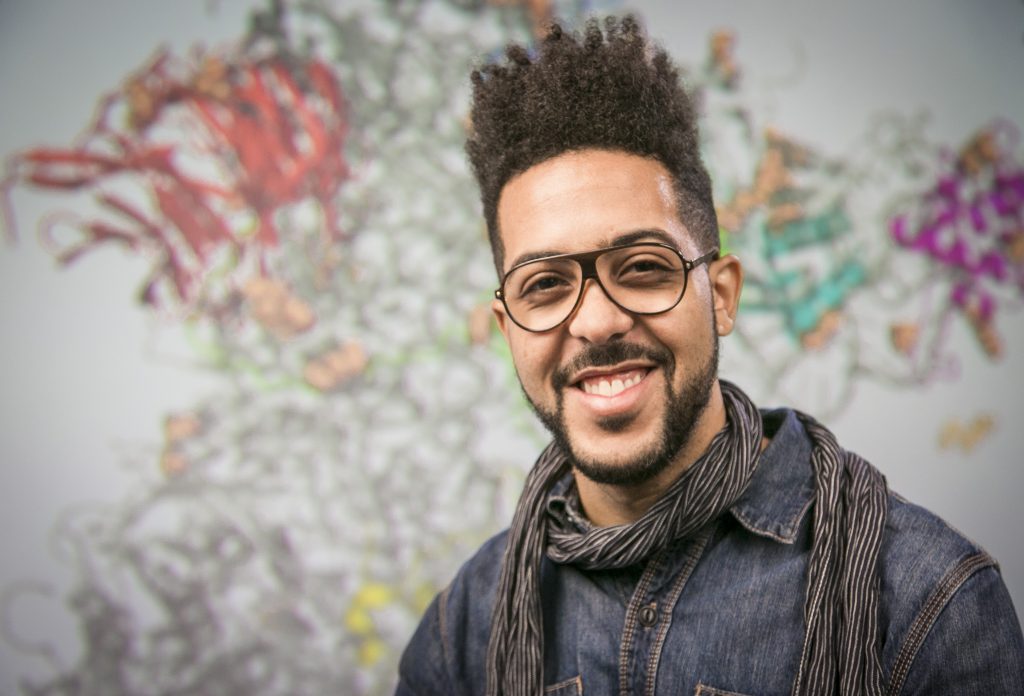
Portraits should be forward-facing with the following attributes:

  • Intimate & authentic
  • Clean and simple composition
  • Soft background
  • Looking toward camera
  • Relevant props & environments

Alumni portraits should be off-campus (to illustrate our impact in the real world) and, when at all possible, include props from their industry. When portraits occur on campus, choose interesting backgrounds such as artwork or the natural world.

Other Things to Consider

Focus

Create a point of focus such that the background blurs a bit, but avoid the image getting too “soft.”

Expression

Can be anything, really. Just try and capture your subject at ease, with their most natural expression.

Background

Be creative, look for backgrounds that are graphic, quiet, or artful.

Proximity

Try the extremes; either really close or really far can be unusual and wonderful.

Candids/In-context

Effective photographs will have the following attributes:

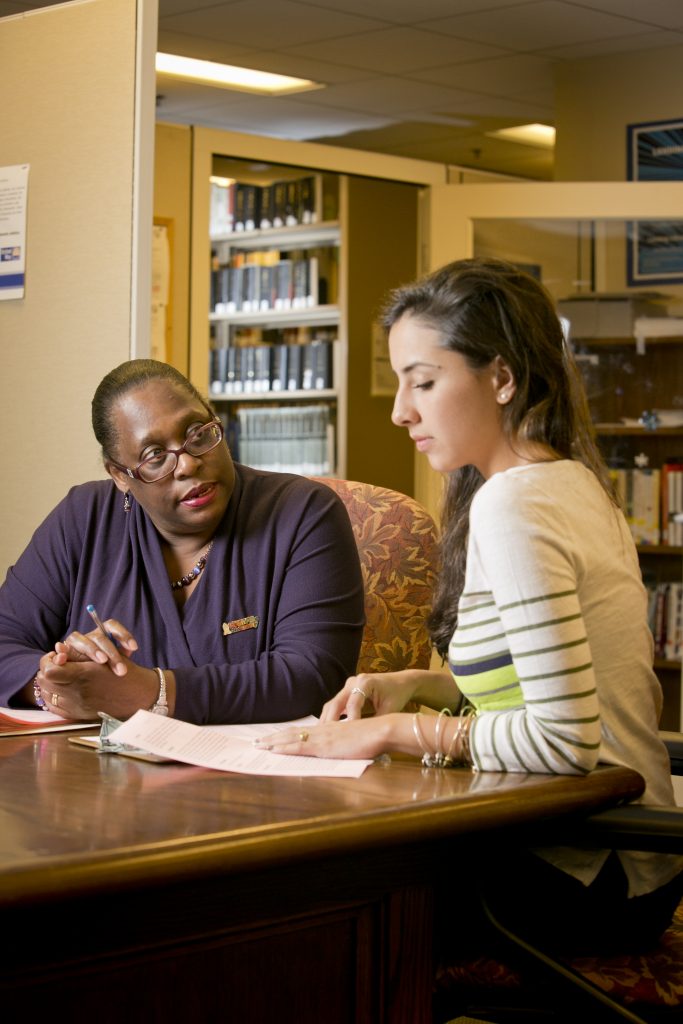
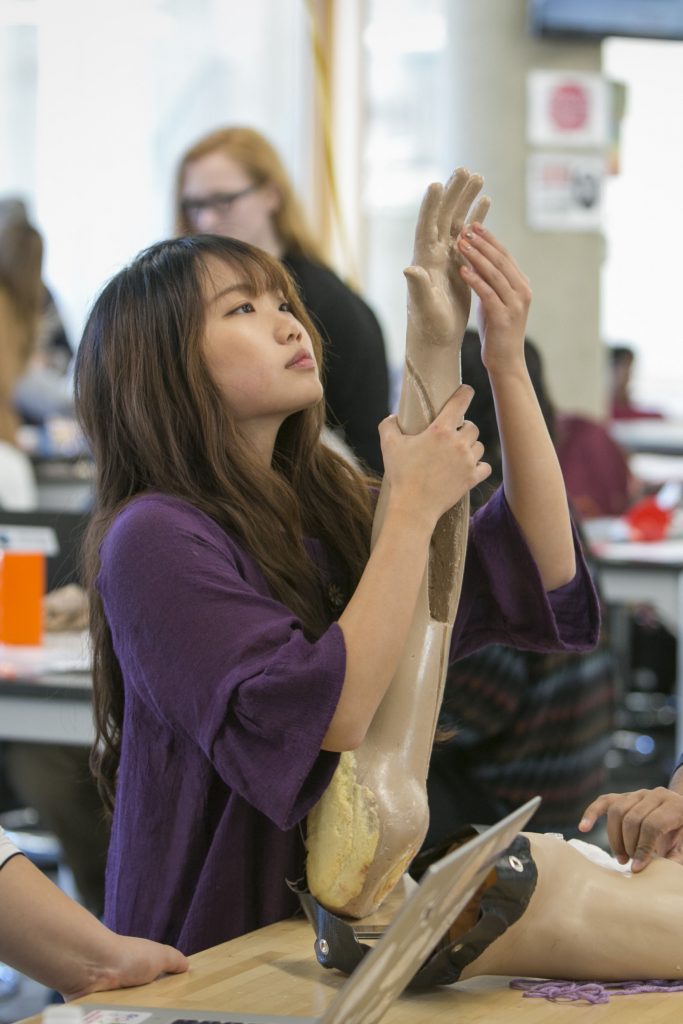
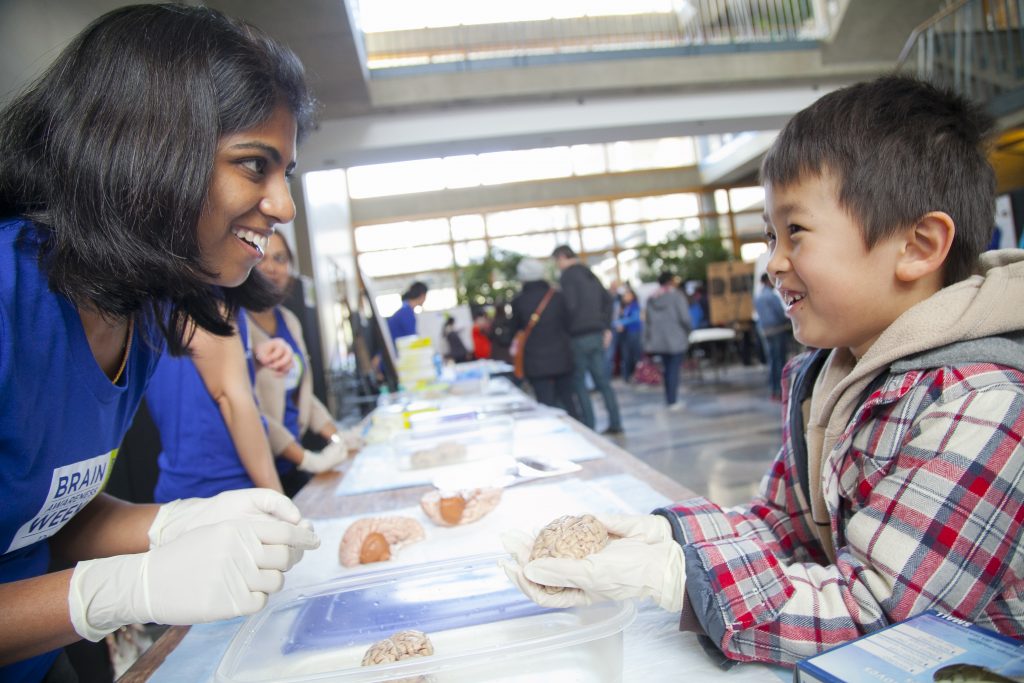
  • Action, reaction and interaction
  • Showing community
  • Unusual angles & points-of-view
  • Context & space
  • Immersive

Photographs that make the user feel as though they are a part of the action can be very impactful. It gives the viewer a sense of being a part of the setting rather than simply viewing.

Successful event photography will capture the unique aspects of the event along with the sponsoring unit’s brand/mark. It may seem like photos of speakers, lectures or symposiums provide context but the goal is to differentiate it from all other photos of event speakers. A photographer should seek opportunities to capture interaction of the speaker(s) with the audience and shoot from different angles.

Scenics & Interiors

Duke is a beautiful place. When considering scenic imagery, consider the time of day for lighting, the traffic pattern of the area and if there may be any zones with special privacy considerations (i.e. the Health System).

  • Time of day & light
  • Traffic & activity
  • People inhabiting the scene
  • Leading lines & framing
  • Scale, depth and layers

Incorrect Use of Imagery

Please keep these guidelines in mind when selecting images:

  • Use stock photos sparingly and avoid those that have a generic feel
  • Use filters sparingly and avoid distorting the natural look of photos

Obtaining Signed Releases

Most campus spaces are public, so photos/videos there don’t need consent forms. Signed releases are required for formal shoots or when individuals are clearly identifiable, especially if names are used. Group or crowd shots without identifiable subjects generally don’t need permission.

When taking personal/individual photos please use the University Photo Release Form.

To maintain patient privacy and ensure HIPAA compliance, any photography or videography in or near the Health System requires permission from the Health System. Please contact Duke Health News & Media for more information.

HIPPA Duke Health Form

Releases should be stored WITH the image file and not exist separate from the photo.

Can I use that picture?

Always avoid pulling photos straight from Google or another online source – it’s best to either take your own photo, confirm usage rights, or use Duke’s library. Using unlicensed images can lead to serious financial and legal consequences.

Mobile Developer Resources

Mobile App Development Resources

Office of Information Technology

If you’re developing an app for Duke University, you can leverage University resources. OIT’s mobile development team provides expertise to help design, test, and launch your app.

Co-lab Studio

The Co-Lab Studio is Duke’s open-access maker space, offering 3D printing, laser cutting, electronics, and other fabrication tools for students, faculty, and staff to design and prototype projects.

It serves as part of Duke’s Innovation Co-Lab, fostering creativity and hands-on learning through digital modeling and fabrication.

External App Development Vendors

We maintain a list of approved app development vendors who other members of staff/faculty have used to develop mobile apps.

List of approved mobile app development vendors – contact mobiledev@oit.duke.edu for details.

Mobile App Directory

Duke University Released Applications

Public iOS applications produced by Duke University are published on Apple’s App Store. Search your iPhone App Store for “Duke University” for the latest applications.

Duke App Icons

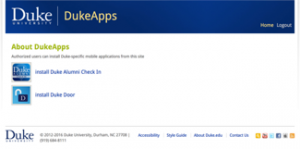
Duke University internal Applications

Other mobile applications, intended for Duke employees/student use are available on Duke’s internal App store: dukeapps.duke.edu for details (NetID/Shiboleth authentication required).

Duke Apps website

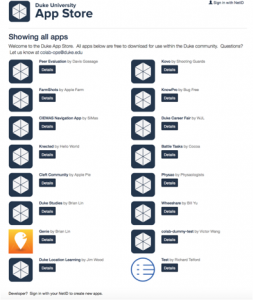
Duke University Student Applications

Student developed applications are made available on the Colab App Store (visit appstore.colab.duke.edu for latest releases.)

Duke University App Store

Web Resources at Duke

Website Best Practices

  • Design responsive and mobile‑first, with progressive enhancement for larger screens.

  • Prioritize accessibility for all users, including high‑resolution devices and assistive tech.

  • Emphasize UX with clean typography and modern web font systems.

  • Deliver clear, structured content – favor depth over click‑bait.

  • Provide real‑time, user‑friendly feedback in forms (auto‑tabbing, inline validation).

  • Optimize for SEO + generative AI by making content concise, trustworthy, and citation‑ready.

Alert Bar

Syndication technology allows for a web bar to appear automatically on websites across the university to highlight emergency news and other alerts. The alert bar accommodates two levels of information. Level 1 alerts, represented by a red bar, will be used for emergencies and will link to the DukeALERT website for additional information. Level 2 alerts, represented by an orange bar, will be used for important messages such as pending severe weather or a gas leak in a building. Download instructions for adding the DukeALERT bar to your website.

Web Fonts

Web fonts enhance design with crisp, scalable rendering. Limit to 2–3 fonts to avoid slow load times, and follow the University’s brand system for approved fonts.

Beyond SEO: Generative Engine Optimization (GEO) and AI Search Visibility

A website has no value if no one can find it. SEO isn’t just about ranking. It’s about making your content discoverable and trustworthy for both search engines and generative AI. With AI-driven overviews and answer engines shaping how people find information, sites must be structured, clear, and citation‑friendly to surface in these new contexts. Optimizing for traditional search and AI ensures your work reaches audiences wherever they look for answers.

Domain Names

Domain names require approval from Duke Communications, Marketing, and Public Affairs. As a general rule, try to stay away from long, cumbersome spellings or ambiguous acronyms. Use fourth level domains if possible to show associations between units and schools.

Domains obtained by third party organization are the responsibility of the purchaser and should not utilize the Duke brand without permission. Read the Duke Domain Request Policy and follow the link at the bottom of the page to complete the request form.

Analytics

Duke’s preferred platform for measuring web site traffic is Google Analytics. If you are unfamiliar with Google analytics or need help getting started, check out Google’s resources.

Accessibility

Duke sites and applications must accommodate a baseline level of accessibility to ensure our content reaches as many people as possible.  Duke aims to meet the Web Content Accessibility Guidelines (WCAG) standards, which are driven by the larger international standards organization for the internet, the W3C. These standards, first published in 2008, are based on 4 key principles: Perceivable, Operable, Understandable and Robust. Within these standards are 3 levels on conformance. A, AA, AAA.

Please visit the Duke Web Accessibility site for more information.

Service Level Agreements

Any work being done through a contract organization – internal or external – requires a minimum service-level agreement of 10 hours per year. Due to the changing nature of the web and the need for version and security upgrades on our preferred platforms, site owners need to identify some portion of their budget and calendar for updates and patching. Without this, sites are subject to vulnerability and attacks. Should a security breach occur, the security office may remove the affected site until it can be confirmed as no longer a risk. IT organizations such as OIT and Duke Health Technology Solutions cannot be held responsible for sites and actions that they did not create nor participate in.

Security

Duke websites present a very viable risk to the university and can provide an avenue of attack against other Duke systems. There is a direct relationship between website compromises and unpatched web environments and associated servers. In an effort to improve the security of all Duke’s websites, the IT Security Office (ITSO), Office of Information Technology (OIT) and Duke Communications, Marketing, and Public Affairs have developed guidance and options for those managing websites at Duke.

Favicons and App Icons

The Garamond “D” makes is a great option to use as the favicon for a website or the home screen icon for your app. Download the full favicon pack or use the icons hosted below.

Audio Resources

Duke Audio Community


Duke has an active community of podcasters and audio producers. Here are some resources for audio work.

Duke Recording Spaces

The Multimedia Project Studio at Bostock Library includes an audio booth available free of charge by reservation to members of the Duke community.

Bryan Center Studios: record podcasts AND bring in faculty for interviews in a controlled studio environment.  

Outside Sources for Ordering Audio Equipment

  1. B&H Photo/Video
  2. Sweetwater

Some Options for Hosting Your Podcast

  1. Warpwire (Free; supported by Duke OIT)
  2. SoundCloud (Free, but includes limits on total audio space; not supported by Duke OIT)
  3. Libsyn (Modest fee; not supported by Duke OIT)

Transcription Apps and Services

  1. Trint.com
  2. Rev.com
  3. Otter.ai

Continue Your Audio Education

  1. Duke Center for Documentary Studies– Offers occasional continuing education courses and summer workshops in audio and podcasting.
  2. LinkedIn Learning – Free tutorials for Duke community members on audio editing software (Adobe Audition, Hindenburg, Protools).

Music Resources

For all of your music needs, visit our music resources page.

Accessibility

Always Provide a Transcript

  • Always provide a transcript (in platform where work is posted, or downloadable in readable formats (HTML, TXT, PDF)
  • Use clear, understandable language (avoid jargon)
  • Ensure good audio quality and minimize background noise
  • Add captions for videos, synced with speech. Include speaker identification.
  • Provide audio in widely supported, accessible formats (MP3, WAV)
  • Consider screen reader compatibility (semantic headings, proper labeling)

Powered by WordPress & Theme by Anders Norén